
Verbalized Machine Learning: Revisiting Machine Learning with Language Models

Today's paper introduces the framework of verbalized machine learning (VML). In contrast to conventional machine learning models that are typically optimized over a continuous parameter space, VLM constraints the parameter space to be human-interpretable natural language.
Method Overview
The core idea behind VML is to view a pre-trained large language model (LLM) as a function approximator parameterized by its text prompt. Both the data and the model are represented in a unified token-based format, unlike numerical machine learning where data and model parameters are treated differently.
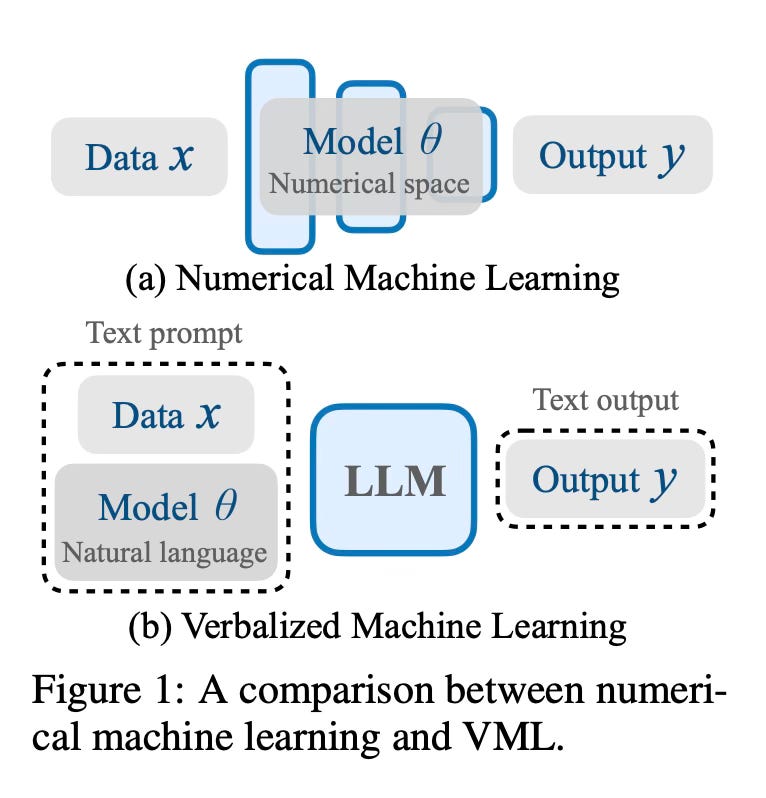
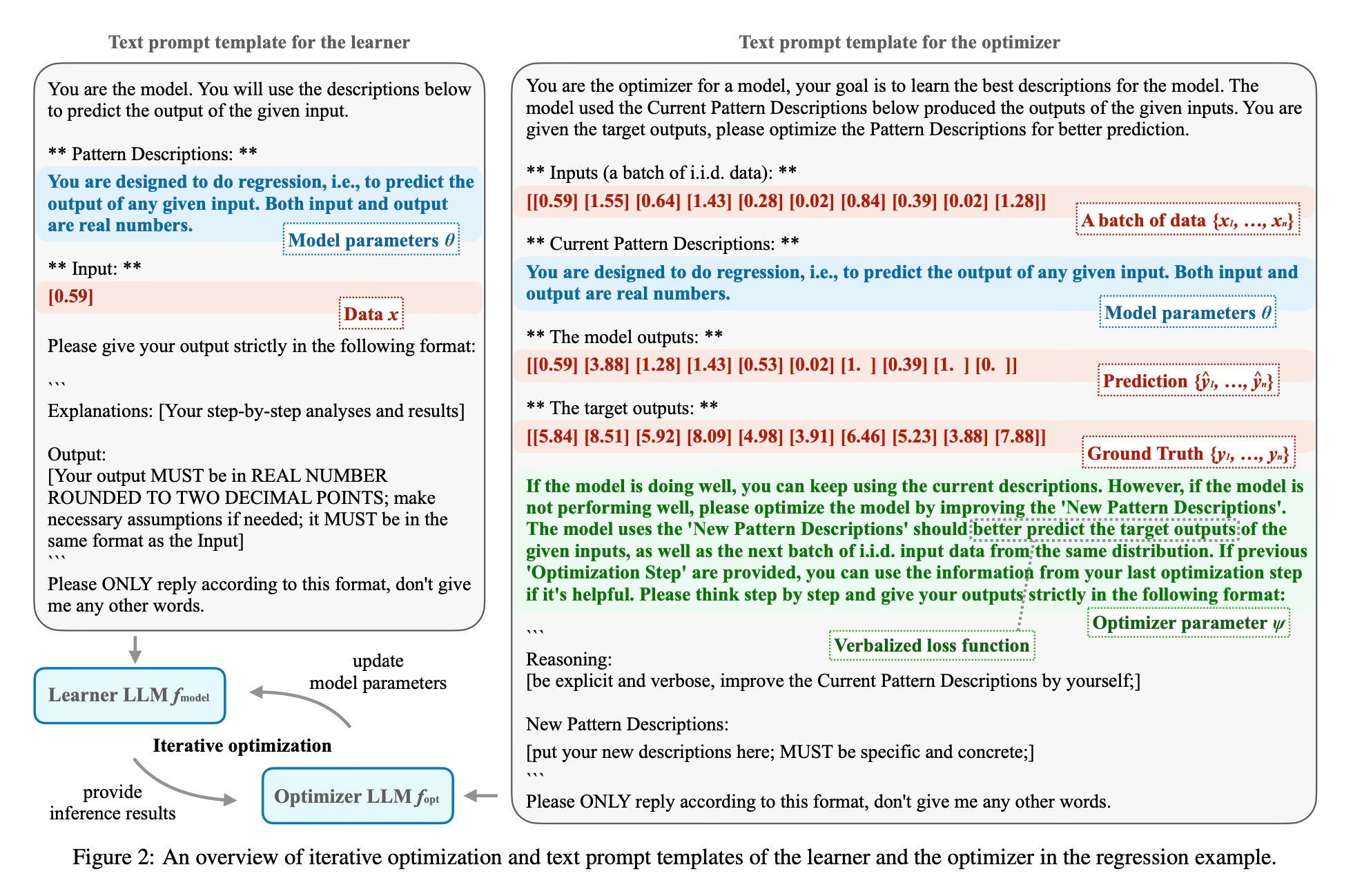
In VML, the model parameters are constrained to be human-interpretable natural language sequences from the set language. Optimizing these discrete text parameters is challenging, so VML uses another LLM called the optimizer to iteratively update the learner LLM's text prompt (model parameters) based on the training data and loss.
The key advantages of VML include:
Easy encoding of inductive bias by providing prior knowledge about the problem and hypothesis class in natural language.
Automatic model class selection, where the optimizer can select and update an appropriate model class during training.
Interpretable learner updates, as the optimizer explains why each update is performed.
The training procedure alternates between 1) using the current learner model to make predictions on a batch of data, and 2) using the optimizer to update the learner's text prompt based on those predictions and the ground truth targets.
Results
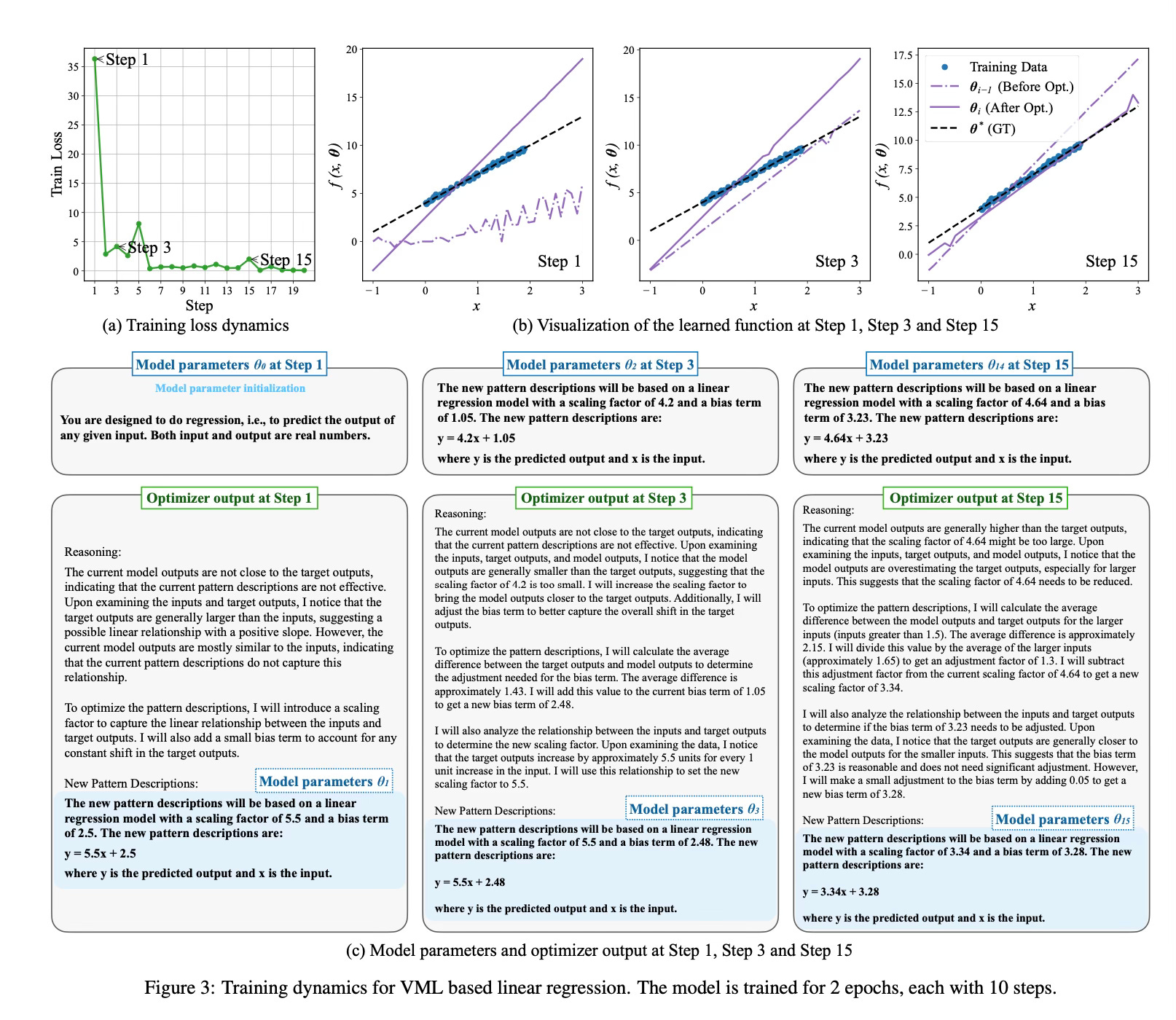
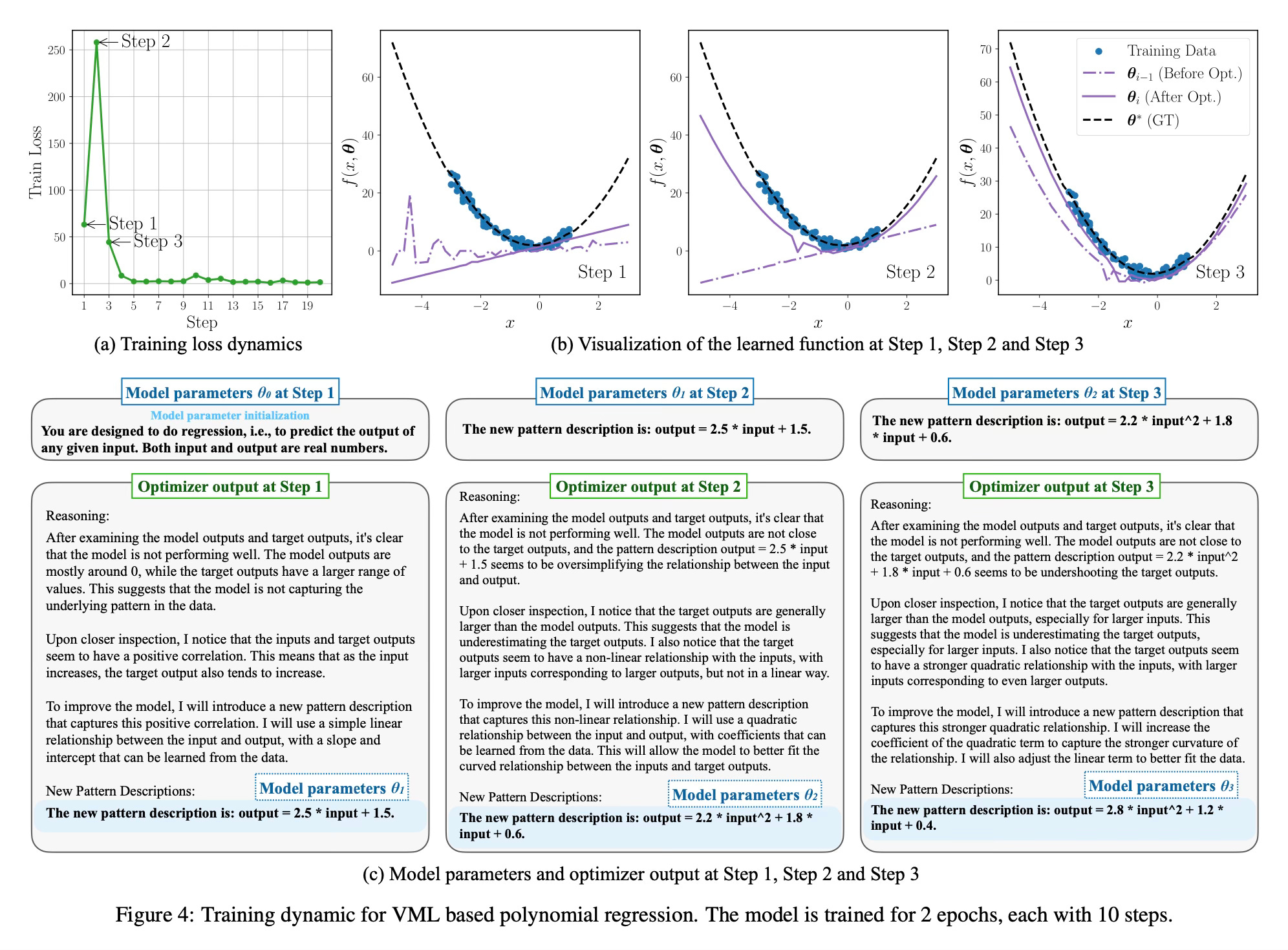
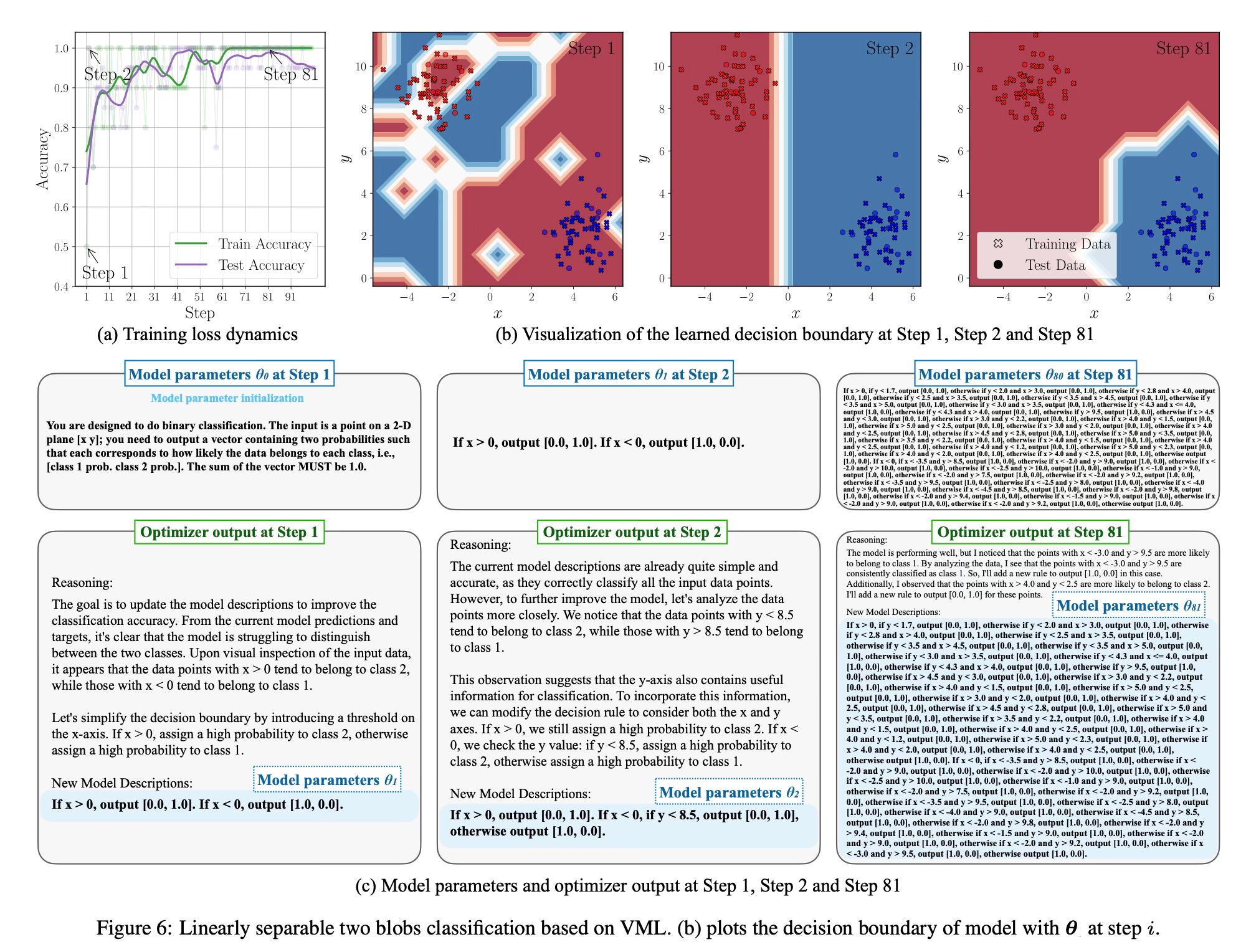
The paper demonstrates the effectiveness of VML on classical machine learning tasks like regression and classification. VML can learn accurate models for linear regression, polynomial regression, sinusoidal patterns, linearly separable classification, and non-linear circle classification problems. Encoding inductive biases as simple language priors improves performance.
Conclusion
VML provides a new perspective on machine learning by using language models as function approximators parameterized by text prompts. It offers advantages like easy encoding of inductive biases, automatic model selection, and interpretable updates during training. For more information please consult the full paper.
Congrats to the authors for their work!
Xiao, Tim Z., et al. "Verbalized Machine Learning: Revisiting Machine Learning with Language Models." arXiv preprint arXiv:2406.04344 (2024).